When You’re the Engine, Build a Better Fuel System
When You’re the Engine, Build a Better Fuel System
If you’re the one powering the whole business, it’s time to think like a system, not a superhero. This blog shares strategies to make your business less dependent on your hustle.
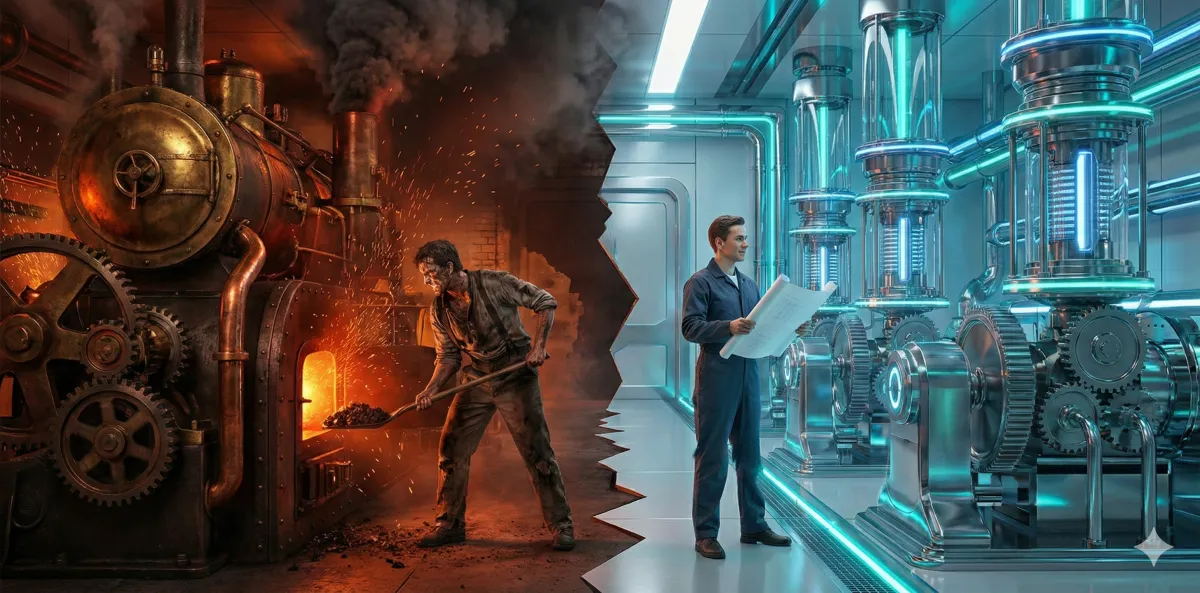
There’s a moment in almost every entrepreneur’s journey when you realise you’re the engine powering the whole thing. Every decision, every deadline, every client touchpoint. It feels good at first, maybe even energising, because building something from nothing has its own adrenaline. But eventually you start to see the limits. An engine can run hot for a while, it can push past what’s reasonable and still keep moving, but it can’t run indefinitely without better fuel, better systems, and better protection.
I’ve been the engine many times in my career. And here in the early stages of building Roamlii, I’m doing exactly what most founders do. I push harder, stretch further, and treat my own energy like an infinite resource. I know that grit and hustle are necessary, and for a time I can just keep pushing and trust that momentum will carry me. But businesses don’t grow just because we push harder, they grow because we learn to build smarter. At some point you have to stop treating your energy like a bottomless tank and start designing a system that supports the kind of work you want to do, not just the work that needs to get done.
There’s a difference between being driven and driving yourself straight into the ground. A lot of founders blur that line without realising how close they are to the edge. I wake up tired, I work late again, I tell myself it’s temporary and we’ll get there, but the definition of temporary has a nasty tendency to keep drifting further away. And honestly, there are days where I’m pretty sure those feelings are skimming into depression. The work piles up and I power through because that’s what builders do. Who else is going to do the work. But if the whole business relies on me being at one hundred percent every day, I don’t have a business, I have a bottleneck...named Conor
I learned this the honest way... actually, I’m still learning it. There comes a point when the work expands faster than your capacity to carry it, and it’s not just the volume, it’s the knowledge gaps. In the beginning you really do have to be a jill of all trades and a pseudo expert in everything, but that can’t last forever. Eventually you have to start handing things off. I’m surrounded by people who believe in the mission, and I’m grateful for every single one of them, every day. I still feel like I’m the linchpin holding everything up though. And that weight gets heavy. Day by day it’s becoming more clear that being the engine won’t be sustainable forever. And that’s why every founder should be working toward building a system that functions even when you step back, step sideways, or step out for a moment to breathe.
One day, I will take a vacation again.
In the meantime, part of building that system starts with looking honestly at how you work. Not the idealised version of yourself, but the real patterns in your day. What drains me. What fuels me. What roles do I naturally gravitate toward, and which ones do I force myself into out of habit or necessity. It’s easy to cling to tasks simply because you’ve always done them, because you find normalcy in them or because you know you can do them really well, maybe even better than most. But that doesn’t mean you should. Founders often mistake competence for obligation. And for someone as fastidious as I am, with a slight perfectionist streak, it can be hard to hand things off when I know I’ll complete something at ninety-five percent and someone else might land closer to eighty. But that’s where the real reckoning happens. Does that extra fifteen percent add meaningful, measurable value? Does it improve our ROI? Do others even notice the difference, or is it just me?
The next part of the system is clarity. I can’t delegate what I haven’t defined. I can’t hire well if I’m unclear about the outcome I need. And I can’t expect others to step into responsibility if I’m holding the full map in my head and handing out pieces in fragments. Early on, I had to learn how to take the picture out of my mind and turn it into something others could follow. Not because I needed to step away, but because the vision needed room to gallop. It’s also incredible to watch how others reinterpret the vision of your company in their own minds, often with ideas and enhancements you hadn’t even considered.
Energy management is real too. If you’re running the engine, you have to notice what depletes your performance and what helps it recover. I started treating my energy like a strategic asset instead of an afterthought. I blocked time for deep work instead of stacking meetings until my brain felt like scrambled eggs. I protected certain hours for thinking, creating, and solving problems instead of letting the day dictate everything. I don’t let anyone book morning meetings in my calendar, because morning meetings drain my energy. I do book them, but I control who and what goes in during those hours. Small changes, but they shifted how I approach the work.
Another part of building a better system is deeply understanding that support is a strength, never a weakness. It’s part of the architecture. Whether that means hiring earlier than feels comfortable and handing over big chunks of trust, using tools that reduce friction, hiring awesome interns looking for meaningful work experience, or trusting automations to handle tasks that don’t require a human touch. Every piece you remove from your mental load creates more space for clearer decisions. When you stop trying to be the entire engine, you start to see how much more powerful the business can become.
I also learned that not all fuel is created equal. There were seasons where I pushed myself on sheer willpower, and it worked for a while but always at a cost. That approach isn’t sustainable, and it probably didn't lead to my best work. The better fuel came from purpose, clarity, community, and alignment. It came from knowing what mattered most and letting go of the noise that didn’t. It came from surrounding myself with people who add to the mission instead of draining it. And it lead to me evolving as a leader.
There’s also a kind of maturity that comes with recognising you can’t hold everything forever. Building a business isn’t about proving that I can do it all. It’s about choosing what deserves my energy and creating structures that support the rest. It’s about pacing myself so the mission outlasts the adrenaline. It’s about building something that can breathe without me constantly keeping the fire lit.
A founder’s job isn’t to be superhuman. It’s to design a system that doesn’t require superhuman effort to run. When you do that, you create a healthier environment for yourself, your team, and the business you’re trying to grow. I make better decisions when I’m not running on fumes. I spot opportunities I would’ve missed when I was buried in tasks. I build momentum that’s grounded, not frantic.
If you’re the engine right now, that’s normal in the beginning. The early stages belong to the scrappy, the resourceful, and the relentless. But those stages are meant to be temporary. The longer you stay there, the harder it becomes to transition out of it. So start now. Build the systems, build the clarity, build the support, and protect your energy with the same intentionality you give your biggest goals.
Let’s build with sustainability and courage, not exhaustion. #GetRoaming and let’s shape a tourism economy that supports the builders, the dreamers, and the people doing the quiet work that makes it all possible.
Yours in tourism, innovation and startups,

Founder & CEO
Roamlii