The Opportunity Cost of Being Invisible
This week, I explored what communities need right now from a digital presence and connectivity perspective. The research pointed toward stronger connective infrastructure, and the more I sit with that idea, the more I think it reflects a broader shift in economic development.
For a long time, the conversation has focused on attraction. Attract visitors. Attract investment. Attract businesses. Attract talent. Those things are all really important, but the deeper I get into tourism, community development, and regional growth, the less I think the challenge is purely attracting attention, and the more I think it’s fuelling that same attention to reach further.
Most communities already have remarkable assets. Businesses, attractions, festivals, trails, cultural organisations, sports facilities, restaurants, accommodations, and passionate people all contribute something meaningful. What I’ve come to realise is that regional strength isn’t simply found in the quality of those individual assets. It’s found in how well they connect to one another.
A visitor arrives for a sporting event and never discovers the local businesses surrounding it. Someone attends a festival but leaves without exploring the wider region. Residents regularly engage with one part of their community while remaining unaware of experiences and organisations that would likely be meaningful to them. The experiences have value, but the pathways between them aren’t always visible.
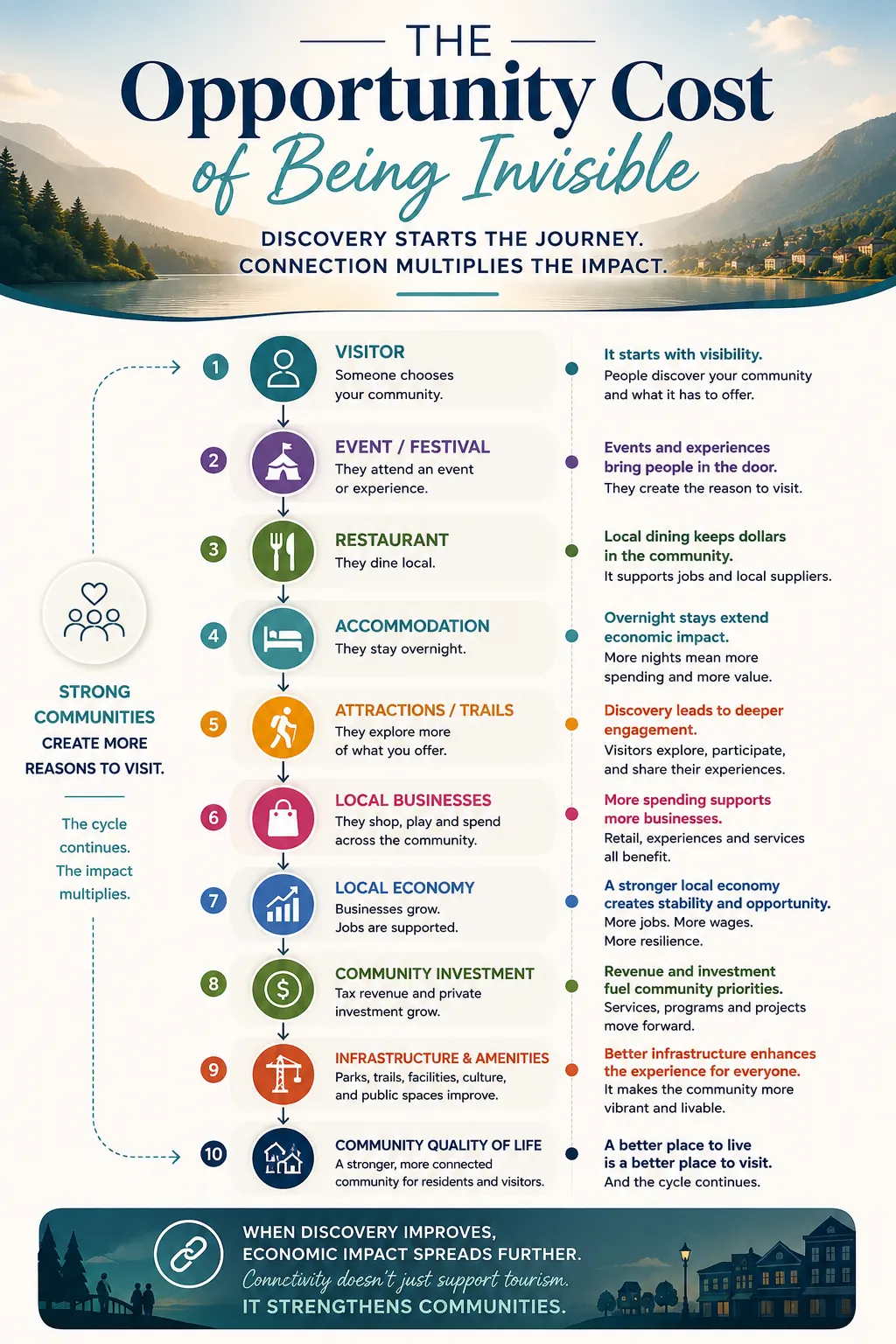
That has real economic consequences. When people discover more, they participate more. When they participate more, they stay longer. When they stay longer, they spend more. More importantly, that spending begins circulating through a broader cross-section of the community instead of concentrating around a handful of highly visible assets.
This thinking sits at the heart of the Regional Experience Pilot we’re discussing with communities across Canada. The pilot isn’t about creating new attractions or replacing existing efforts. It’s built around a simpler question: what happens when a region intentionally makes it easier for people to discover, navigate, and engage with everything that already exists?
I’m increasingly convinced that connected regions have an advantage. They create more opportunities for visitors to explore, for residents to participate, and for businesses, organisations, and events to support one another through shared visibility and discovery.
The future of economic development won’t be built solely through individual success stories. It will be built through ecosystems that help those successes connect, reinforce one another, and create value that spreads throughout the region.
Strong communities already exist. The opportunity is helping people experience them as connected communities rather than disconnected assets.
Ready to support the sector that supports us all?
#GetRoaming and let’s build a more connected, resilient, and thriving Canada, one traveller, one town, one story at a time.
Yours in tourism, innovation and startups,

Founder and CEO, Roamlii