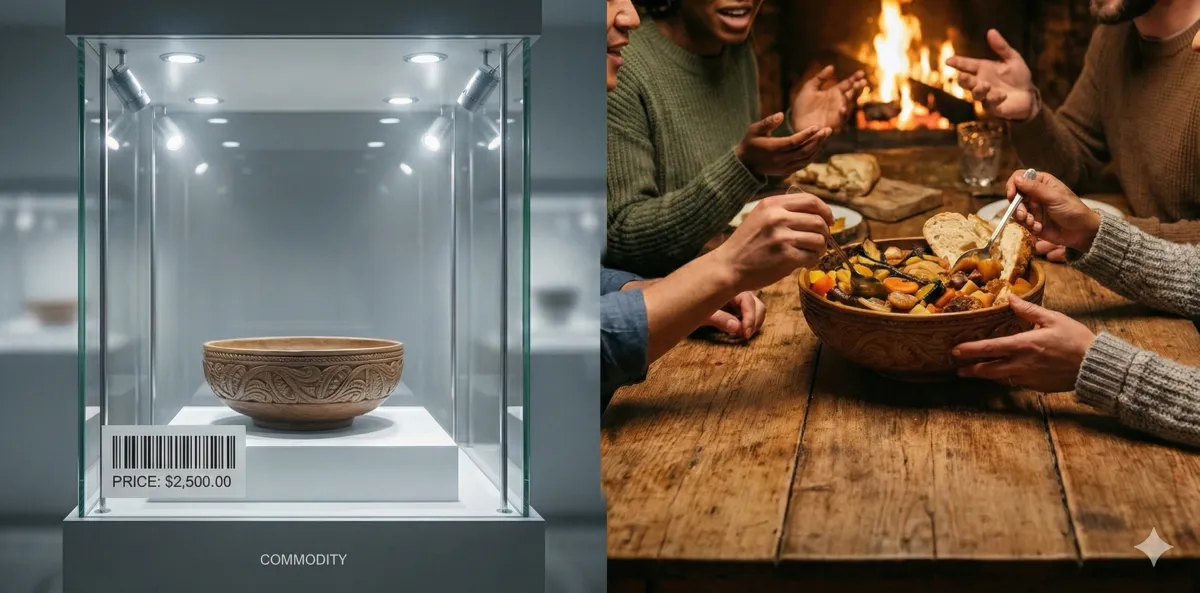
Culture Isn’t a Commodity, It’s a Conversation
Culture-based tourism can be one of the most meaningful forms of travel, but only when approached with care. This blog explores how operators can honour cultural experiences authentically, without turning identity, history, and tradition into something transactional.
One of the things I’ve always loved about tourism is that at its best, it creates moments of genuine exchange. A traveller arrives curious, a community shares something meaningful, and somewhere in the middle there’s a connection that didn’t exist before. When it works well, it feels generous on both sides. When it doesn’t, it can start to feel like something else entirely.
Culture sits right in the middle of that tension.
Over the past decade, culture-based tourism has grown steadily in popularity, and for good reason. Travellers increasingly want experiences that feel rooted in place, not just another stop on a checklist. They want to understand the stories behind a region, the traditions that shape it, and the people who carry those traditions forward. That curiosity can be incredibly positive. It invites deeper engagement and encourages communities to share the parts of themselves that make them distinct.
But culture is also delicate. When it moves into the tourism space, there’s always the risk that something meaningful gets flattened into something marketable. Traditions become products. Ceremonies become scheduled performances. Stories become sound bites. It rarely happens overnight, and it’s almost never malicious. It’s usually the slow result of good intentions meeting commercial pressure.
What I’ve learned through years in this sector is that culture works best in tourism when it’s treated as a conversation rather than a commodity.
A commodity is something packaged, standardised, and delivered the same way every time. A conversation, by contrast, has context. It evolves. It requires listening as much as speaking. Cultural tourism that honours its roots tends to operate much closer to the second model.
That shift begins with respect for ownership. Culture doesn’t belong to the tourism industry. It belongs to the communities who live it, carry it, and pass it forward. Tourism operators can create opportunities for travellers to engage with culture, but the authority to define what that engagement looks like should remain with the people whose stories are being shared.
When that principle is honoured, something interesting happens. The experience becomes more authentic, not less. Travellers are remarkably good at sensing when something is genuine. A conversation with a local artist, guide, or knowledge keeper who chooses how and what to share will always feel richer than a scripted performance designed purely for visitor consumption.
It also changes the tone of the exchange. Instead of feeling like a transaction, the experience begins to feel like participation. Visitors aren’t just buying access. They’re being invited into a space of learning and perspective. That invitation carries a kind of quiet responsibility, which most travellers are happy to honour when it’s framed properly.
This is where tourism operators have an important role to play. Creating cultural experiences isn’t just about programming activities. It’s about designing environments where respect and curiosity can coexist. That might mean collaborating directly with community members who shape the experience from the beginning. It might mean setting clear expectations for visitors so they understand the context of what they’re seeing. It might also mean recognising that not every aspect of culture is meant to be shared publicly.
The temptation to turn everything into a product is understandable. Tourism, after all, operates within an economic system, and experiences often need to generate revenue to be sustainable. But sustainability in cultural tourism isn’t only financial. It’s relational. If a community begins to feel that its traditions are being mined rather than honoured, the long-term cost is trust.
Trust is what allows cultural tourism to thrive in the first place.
Some of the most powerful tourism experiences I’ve encountered weren’t elaborate productions. They were simple moments of storytelling, a conversation around a table, a walk through a landscape guided by someone who knows its history intimately. What made them meaningful wasn’t spectacle. It was sincerity.
There’s also something important about recognising that culture isn’t static. Communities evolve. Traditions adapt. New expressions emerge alongside older ones. When tourism treats culture as a fixed artefact to be preserved exactly as imagined, it risks freezing a living system in place. Respecting culture means allowing it to breathe and change, even when that change doesn’t fit neatly into a marketing narrative.
For destinations thinking about how to incorporate culture more intentionally into tourism offerings, the starting point is usually partnership. Not consultation at the end of the process, but collaboration at the beginning. Ask communities what they want visitors to understand about them. Ask what feels appropriate to share and what doesn’t. Ask how benefits should flow back into the people who are contributing their knowledge and time.
That kind of partnership often produces experiences that feel deeper and more grounded than anything a tourism team could design on its own.
It also helps visitors approach cultural experiences with the right mindset. When travellers understand that what they’re participating in comes from a place of mutual respect, they tend to show up differently. They listen more carefully. They ask better questions. They recognise that they’re guests in someone else’s story.
And that’s really what culture-based tourism is about when it’s done well. Not consumption, but connection.
From where I sit, building systems and infrastructure for tourism, I’ve come to believe that the industry has an opportunity here. Technology, when used thoughtfully, can amplify cultural experiences without diluting them. It can help travellers discover authentic opportunities to engage with communities. It can provide context before someone even arrives. It can support storytelling in ways that remain controlled by the people telling the story.
What technology shouldn’t do is replace the human element that makes cultural exchange meaningful in the first place.
Because culture isn’t something you download. It’s something you encounter.
And when that encounter is approached with humility and curiosity, something powerful happens. Travellers leave with a deeper understanding of a place. Communities feel respected rather than exploited. The experience becomes something more than an attraction. It becomes a shared moment of learning.
Tourism has always had the potential to bring people closer together. Culture-based tourism, when handled with care, simply makes that potential more visible.
The key is remembering that culture isn’t a commodity to be packaged and sold. It’s a conversation, one that communities have been having with themselves for generations, and one that travellers are fortunate to be invited into.
Ready to support the sector that supports us all?
#GetRoaming and let’s build a more connected, resilient, and thriving Canada, one traveller, one town, one story at a time.
Yours in tourism, innovation and startups,

Founder, Roamlii